Your Basket

Model: 21-5102-MAG
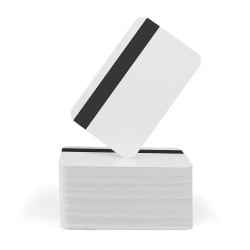
EM4200 125kHz proximity cards with a HiCo 2750 Oe magnetic stripe, supplied blank in packs of 100. One card carries both technologies: proximity for door access and magnetic stripe for time and attendance, print release or cashless vending.EM4200 read-only chip, 125kHz (100 to 150kHz range).Each card has a unique serial number that identifies it.HiCo 2750 Oe magnetic stripe.Read range 2 to 10cm, depending on the reader.White gloss PVC, CR80 credit card size, 0.76mm thick.Prints on any plastic card printer.Operating temperature -40°C to +85°C.Pack of 100 cards...
£59.99
Model: PAC-23361
Fermax reference 23361 is a white PVC proximity card for identifying users on a Fermax proximity access system. This version has no magnetic stripe and needs no battery. Sold in packs of 10.EM card, modulation ASK 125 kHz.Credit card format in white PVC.Screen-printed with a logo and the card code. Each card carries the identifier used to authorise it in the system.No maintenance required.Can be customised with your own logos and photographs on a sublimation printer...
£47.50
Model: 2000PGGMN
Please note that these are a pack of 100 cards. The Price is based on a H10301 format, for any other format, please contact us.
You will need the format, site code and sequential number range required in order for us to process your order, if you require assistance with this, please get in touch...
£465.00
Model: HID-2000PG1MN
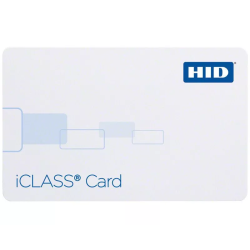
The HID iCLASS® 2K PVC smart card (part number HID-2000PG1MN, underlying HID MPN 2000PGGMN) is a 13.56 MHz contactless credential for organisations running iCLASS access control systems and is supplied in a pack of 100. It arrives encoded to the H10301 26-bit format and is ready to programme to your site code and number range.
Ordering works around your site details
These cards are custom-programmed credentials. After you place your order, confirm your site code and the sequential number range you need; the cards will be encoded accordingly. The card itself is plain white with a small HID logo and card number printed along the bottom edge, leaving the rest of both surfaces clear for photo ID or branding. If you require a format other than H10301, contact the team before ordering.
What iCLASS® smart card technology gives your system
iCLASS® operates at 13.56 MHz with read/write contactless smart card technology, delivering high-speed, reliable communication with high data integrity. Security rests on mutual authentication between card and reader, encrypted data transfer, and 64-bit diversified keys, meaning every read/write transaction is verified at both ends, and the data on the card cannot simply be cloned. The 2K bit (256-byte) memory is split across two securely separated application areas, so a single card can hold your access control credential alongside a second application such as cashless vending, time and attendance, network log-on, or biometric verification.
Each card carries a passive antenna with no battery. The passive design supports an estimated minimum 100,000 reads, and HID rates data retention at 10 years. Transaction time is under 100 ms, so read speed at the door is not a bottleneck even in high-footfall environments.
A printable surface built to ID card printer standards
The 2000PGGMN meets ISO standards for card thickness, which matters because it means the card feeds correctly through direct image and thermal transfer printers without risking the printhead. The glossy surface on both front and back is optimised for photo ID printing and accurate colour reproduction, so the card works as a visual staff credential as well as an electronic one. Optional additions at the factory level include a magnetic stripe, barcode, custom artwork, and anti-counterfeiting features such as holograms, ultra-violet fluorescent inks, and micro-printing. The card carries no vertical slot punch, but three guide dots indicate the safe punching position; slot punching after printing protects the printer's printhead.
Specification
Detail
HID Part Number2000PGGMN (AddACard SKU: HID-2000PG1MN)
FormatH10301, 26-bit
Frequency13.56 MHz
Memory2K bit (256 bytes), 2 application areas
Card materialPVC
Card size85.6 mm × 54 mm × 0.76–0.84 mm
Surface finishGlossy front and back
Slot punchNo (guide dots present)
Card numberingSequential matching encoded/printe..
£302.00
Model: 1386LGGMN
Please note that these are a pack of 100 cards. The Price is based on a H10301 format, for any other format, please contact us.
You will need the format, site code and sequential number range required in order for us to process your order, if you require assistance with this, please get in touch...
£585.00

Model: AA1386
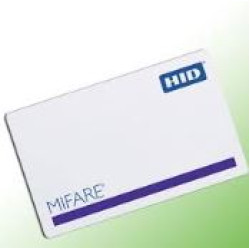
The HID ISOProx II card (HID part 1386) puts HID proximity technology and a photo ID surface on one access control card. Cards on this listing are programmed to your site's format.ISO 7810 compliant, the same size and thickness as a standard credit card (nominal thickness 0.030")Graphics quality surface for use with direct image printersVertical or horizontal slot punch capabilityHID makes the card in PVC laminate or in composite polyester/PVCTypical maximum read range from 6.25 cm on a ProxPoint Plus reader to 50 cm on a MaxiProx reader, depending on local installation conditionsLifetime warranty from HIDFor retransfer printers that fuse the image with heat and pressure, HID recommends the composite version of the card...
£5.95
Model: 1430NGGNN
Please note that these are a pack of 100 cards...
£395.00

Model: AA1326
Please note that these are a pack of 100 cards. The Price is based on a H10301 format, for any other format, please contact us.
You will need the format, site code and sequential number range required in order for us to process your order, if you require assistance with this, please get in touch...
£325.00
Model: PAC-21018
KeyPAC ISO Proximity Cards – 125kHz Printable Access Cards (Pack of 10) – 21018 / 21030 / PAC-CD-CR-KPACThe KeyPAC ISO Proximity Card (21018 / 21030 / PAC-CD-CR-KPAC) is a reliable, high-quality 125kHz contactless access card, ideal for use with KeyPAC and PAC access control systems. Supplied in a convenient pack of 10, these cards feature an ISO standard thickness and are fully printable, making them perfect for personalisation with logos, photos, names or barcodes using ID card printers.Designed for high-traffic environments, KeyPAC ISO cards provide a secure and convenient solution for managing access across offices, schools, retail, and secure facilities. Each card is pre-programmed with a unique identifier, ensuring easy enrolment and user management.Key Features:
125kHz proximity card technology – designed for KeyPAC & PAC systems
ISO format – CR80 standard size (86 x 54mm), 760 micron thick
Printable surface – suitable for dye sublimation or retransfer card printers
Durable and reliable – made from high-quality PVC for long-term daily use
Contactless operation – fast, secure access with no wear on readers
Pack of 10 – ideal for teams, new users, or bulk enrolments
Ideal For:
Corporate offices and business premises
Educational institutions and student ID programmes
Retail, hospitality, and public sector sites
Facilities using KeyPAC or PAC-compatible readers
Time and attendance, visitor management, or secure door entryProduct Code:
21018 / 21030 / PAC-CD-CR-KPAC – KeyPAC ISO Proximity Card (Pack of 10)..
£38.99
Model: PAX-692-052
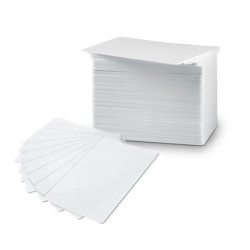
Paxton Net2 proximity ISO cards, sales code 692-052, supplied as a pack of 500. These are user tokens for a Net2 access control system. They have no magnetic stripe and no signature strip.125kHz carrier frequency.Plastic card measuring 86mm x 55mm x 0.85mm.Can be printed on using a universal card printer.Hitag2 technology with proprietary encoding, including an authentication protocol based on a password exchange between token and reader.Issued by entering the user in the Net2 PC software, then presenting the token to the desktop reader.Paxton lists the Net2 desktop reader, USB (514-326) to complete the system...
£1,749.00
Model: MF3DHx3-4K
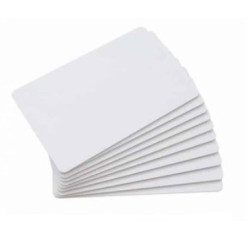
Cards with an NXP MIFARE DESFire EV3 chip in its 4kB memory version, in a pack of 100. NXP describes DESFire EV3 as a high-security IC for contactless smart city services, with Common Criteria EAL 5+ certification of the IC hardware and software.4kB memory version of the DESFire EV3 ICContactless interface compliant with ISO/IEC 14443-2/3 A, with an ISO/IEC 7816-4 file structureOpen crypto algorithms based on DES, 2K3DES, 3K3DES or AES, including hardware AES with 128-bit keysSUN message authentication, plus a Transaction Timer to mitigate man-in-the-middle attacksData retention of 25 years and typical write endurance of 1,000,000 cyclesOperating distance up to 100mm, depending on the power from the reader and the antenna geometry..
£144.00
Model: AAPROXCARD
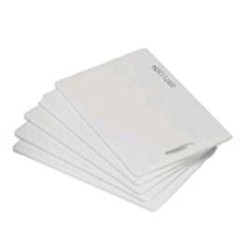
Olix Cards – 125kHz Non-Printable Proximity Cards (Pack of 10) – AAPROXCARD
The Olix Cards (AAPROXCARD) offer a practical, secure, and cost-effective access control solution for organisations of all sizes. These non-printable 125kHz proximity cards are ideal for environments where no personalisation or printing is required, such as for temporary access, visitor passes, or anonymous credentials.
Supplied in a convenient pack of 10, these RFID cards are fully compatible with most standard 125kHz access control systems and proximity readers, making them a versatile choice for entry-level or high-volume deployments.
Key Features:
125kHz low-frequency RFID technology – compatible with widely used proximity access systems
Non-printable – ideal for basic access where ID personalisation isn’t needed
Supplied in a pack of 10 – great for bulk or multi-user distribution
Durable PVC construction – resists wear and tear for long-term use
Standard CR80 card size (credit card dimensions) – fits badge holders, wallets, and lanyards
Pre-programmed with unique serial numbers – supports easy enrolment into your system
Applications:
Temporary staff or visitor access
Secure entry in schools, offices, and commercial premises
Time and attendance systems
Industrial and warehouse environments
Any access control solution requiring non-personalised credentials
Product Code:
AAPROXCARD – Olix Card (Pack of 10, Non-Printable)..
£17.50
Model: AAPROXCARDISO
Olix proximity card ISO Thin – Proximity Access Control Card (AAPROXCARDISO)The Olix proximity card ISO Thin is a high-quality, low-frequency proximity access control card designed to deliver reliable performance in a wide range of security systems. Operating at 125kHz, this ISO-format card offers a slim, credit-card-style profile—perfect for printing, personalisation, or badge integration.Ideal for businesses, schools, and organisations looking for a cost-effective and durable card for staff, visitor or contractor identification, the AAPROXCARDISO is compatible with most standard 125kHz proximity readers.Key Features:
125kHz low-frequency proximity technology – compatible with most standard access control systems
ISO thickness – suitable for thermal printing or custom branding
Contactless operation – no physical wear or reader contact required
Durable PVC construction – long-lasting, resistant to bending and cracking
CR80 credit card size (86 x 54mm) – fits all standard ID card printers, lanyards, and badge holders
Ideal for access control, time and attendance, and secure identification
Applications:
Corporate offices and commercial buildings
Educational institutions and student ID systems
Healthcare, hospitality and leisure venues
Visitor management and temporary access
Compatible with proximity-based door entry and clocking systems..
£32.50
Model: PAC-21039
Also known as K2011B..
£45.49
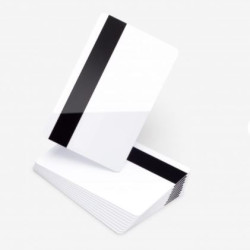
Model: PAX-695-573
Paxton Net2 Mag stripe only - please note that there is no proximity element on these cards...
£30.00
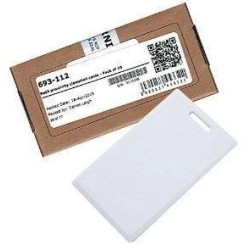
Model: PAX-693-112
Paxton Net2 proximity clamshell cards, sales code 693-112, supplied as a pack of 10. They are user tokens for a Net2 access control system.125kHz carrier frequency.ABS/plastic clamshell construction, 86mm x 55mm x 2mm.Hitag2 technology with proprietary encoding, including an authentication protocol based on a password exchange between token and reader.Issued by entering the user in the Net2 PC software, then presenting the token to the desktop reader.Once programmed, presenting the card to a reader looks up the user's access permissions and grants or denies entry.Paxton lists the Net2 desktop reader, USB (514-326) to complete the system...
£64.00
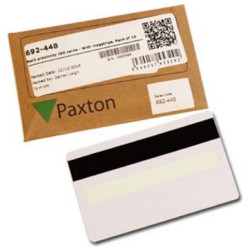
Model: PAX-692-448
Paxton Net2 proximity ISO cards, sales code 692-448, supplied as a pack of 10. These are user tokens for a Net2 access control system. They carry a magnetic stripe and a signature strip.125kHz carrier frequency.Plastic card measuring 86mm x 55mm x 0.85mm.Can be printed on using a universal card printer.Hitag2 technology with proprietary encoding, including an authentication protocol based on a password exchange between token and reader.Issued by entering the user in the Net2 PC software, then presenting the token to the desktop reader.Paxton lists the Net2 desktop reader, proximity and magstripe (350-910) to complete the system...
£44.00
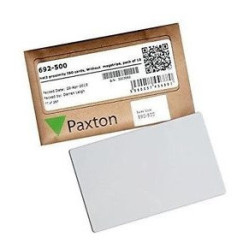
Model: PAX-692-500
Paxton Net2 Proximity ISO Cards Without Magstripe Overview
These genuine Paxton 692-500 Net2 proximity ISO cards are the standard access control card for Paxton Net2 systems, supplied in a pack of 10 for teams that need to issue, replace or expand credentials with minimum fuss. Each card arrives blank and ready to print, making them equally useful as plain access control cards or as branded staff ID.
What you get in the pack
Each 692-500 card is manufactured to ISO standard CR80 dimensions (86mm × 55mm), so it sits in any standard card holder and feeds through any ID card printer. There is no magnetic stripe and no signature panel on the rear face, which leaves the full surface free for printing. The pack contains 10 individually encoded cards, each carrying a unique number that the Net2 system uses to identify the user.
How the cards work with Net2
Issuing a card is a two-step process that any Net2 installer will find straightforward. Enter the user's details using the PC software, then present the card to the desktop reader; the unique number is read into Net2 and the card is ready for use. Once issued, a user simply presents the card to any enrolled Net2 reader, and access permissions are instantly looked up. Access is then granted or denied as appropriate.
Security technology
Paxton tokens use Hitag2 technology with proprietary encoding. This includes an authentication protocol in the form of a password exchange between the token and the reader, adding a layer of security beyond basic proximity. The 125kHz carrier frequency is the standard across the Net2 access control range, so 692-500 cards are compatible with all Net2 proximity readers.
Printing and customisation
The blank white PVC card takes print from any compatible ID card printer, which means you can add a photo, job title, logo or building zone directly to the card face. So, this is a great option for sites that want cards to double as staff photo ID. Offices, schools, healthcare premises and membership organisations find this more practical than key fobs, because they double as ID and access control. If you need a card with a magnetic stripe for a system that also reads swipe cards, the Paxton Net2 proximity ISO card 692-448 carries both a proximity chip and a hi-co magstripe in the same CR80 format.
For staff or visitors who prefer something they can attach to a keyring rather than carry in a wallet, the Paxton Net2 Proximity Key Fobs 695-644 (pack of 10) use the same Net2 proximity technology and enrol in exactly the same way.
The 692-500 pack of 10 is the right choice when you are running a Paxton Net2 access control system and want genuine, printable cards that enrol cleanly, carry proper Hitag2 security, and leave no compatibility guesswork.
Specification
Detail
Part number692-500
Compatible systemPaxton Net2
Carrier frequency125kHz
TechnologyHitag2 with proprietary encoding
Card formatISO ..
£44.00
Model: PAX-692-053
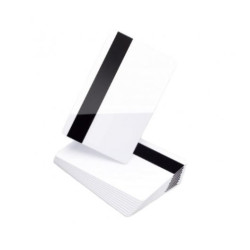
Paxton Net2 proximity ISO cards, sales code 692-053, supplied as a pack of 500. These are user tokens for a Net2 access control system. They carry a magnetic stripe and a signature strip.125kHz carrier frequency.Plastic card measuring 86mm x 55mm x 0.85mm.Can be printed on using a universal card printer.Hitag2 technology with proprietary encoding, including an authentication protocol based on a password exchange between token and reader.Issued by entering the user in the Net2 PC software, then presenting the token to the desktop reader.Paxton lists the Net2 desktop reader, proximity and magstripe (350-910) to complete the system...
£1,826.00